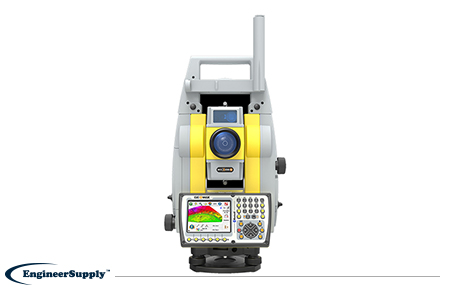
With this total station, you can minimize the amount of time it takes to perform any survey task, while maximizing your performance and accuracy on the job site. This total station for surveying is the ultimate one-man system with the following features:
- Up to 20% more automation performance.
- Extended reflectorless measurement capability.
- STReAM 360.
- AccXess technologies.
- Windows CE open connectivity.
It will scan the entire working area in seconds, so you can find your target quickly. Once it’s locked, the instrument will continue to aim at the target (even if it’s moving). It will also aim accurately at any prism without having to look through the telescope, and measurements are performed automatically with a great deal of dependability.
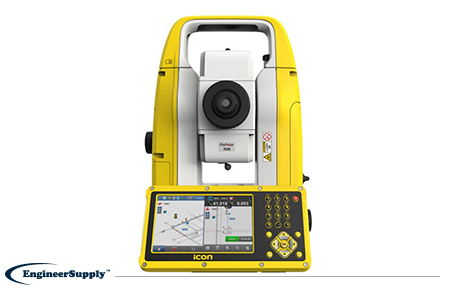
This Leica total station will allow you to go digital, so it’s leading the way to the no-strings and no-tapes approach for a construction project. It’s easy to learn, so you can finish your projects more efficiently and with very little training. This total station will allow you to perform a variety of tasks, which include but may not be limited to:
- Evaluating layout points and lines quickly and accurately.
- Evaluating complex structures easily.
- Quickly performing verticality checks on formwork and structures.
- Completing fast and accurate as-built measurements.
- Working with digital design data (including fully rendered models in IFC format).
If you’re looking for one of the best
total stations for construction and surveying applications, be sure to pick yours up at
Engineer Supply.