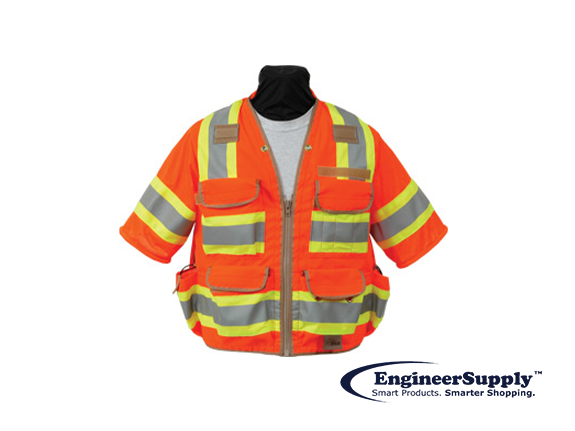
. These vests are suitable for individuals who work in construction, repair, or perform demanding tasks. If you’re in construction, roadwork, surveying, or emergency response, this is the vest for you.
are best for low-risk jobs. Manufacturers make them with thinner, breathable materials—often mesh or basic polyester. They don’t weigh much, which makes them comfortable for warm or indoor spaces.
Key Features of Light-Duty Vests:
- Lightweight and breathable
- Simple design with fewer pockets
- Velcro closures
- Basic reflective strips
- Usually meet ANSI Class 1 standards.
When Do You Need a Light-Duty Vest?
Pick a light-duty vest if you:
- Work in a warehouse
- Manage parking lots
- Handle deliveries
- Work indoors most of the time
- You don’t need to carry tools or gear with you.
Light-duty vests are suitable for short shifts, volunteer events, or when comfort is a top priority.
Heavy-Duty vs Light-Duty Safety Vests
Strong materials, such as Oxford or Cordura, are used to make heavy-duty vests. These fabrics withstand rough conditions and last longer. They usually meet ANSI Class 2 or 3 visibility standards, which means they’re good for workers exposed to traffic or heavy equipment. These vests often come with multiple tool-ready pockets, secure closures, and reinforced seams. They're warmer and bulkier but give better protection. They're best suited for construction sites, road crews, surveyors, and other high-risk jobs.
On the other hand, light-duty vests utilize lightweight materials such as mesh or thin polyester. They’re breathable and easier to wear for long periods, especially in warmer indoor spaces. These vests typically meet ANSI Class 1 standards, offering basic visibility for low-risk environments. They have fewer pockets or none at all, and they’re best for roles like warehouse work, parking lot management, or deliveries, where mobility and comfort are more important than extra protection
ANSI Safety Classes
The
(ANSI)American National Standards Institute has rules for safety vests. Here’s a quick way to remember them:
- Class 1: For low-risk areas. Usually light-duty vests.
- Class 2: For areas with moderate traffic or bad weather. Most heavy-duty vests fall here.
- Class 3: For high-risk work with fast-moving traffic or poor visibility. These vests also cover your arms and legs
Always check if your job requires a specific ANSI class. Some companies have strict safety rules you need to follow.
What to Look for When Buying
Here are some things to keep in mind before you pick your safety vest:
- Fit: Ensure it fits snugly but still allows for comfortable movement. You may be wearing it over jackets or uniforms.
- Pockets: If you carry radios, pens, or tools, go for a vest with chest and side pockets.
- Closure Type: Velcro is quick and easy. Zippers are more secure, especially in windy or rough conditions.
- Fabric: Do you need something that keeps you cool? Go mesh. Working in cold or wet weather? Choose solid fabric that resists rain and wind.
- Color: Most safety vests come in bright yellow-green or orange. These colors stand out during the day and night.
Final Thoughts
The job you do should guide the
safety vest you wear. If you’re working hard in a busy, high-risk space, go with a heavy-duty safety vest. It’s tougher, lasts longer, and keeps you safer. If you work in quieter areas or perform light tasks, a light-duty vest is likely sufficient.
Don’t just grab whatever’s cheapest or lie around. Consider your job, surroundings, and the level of protection you truly require. A vest that suits your workday can keep you safer and help you work smarter.
Looking for a safety vest that suits your work style?
Engineer Supply offers both heavy-duty and light-duty safety vests for various work environments, ranging from high-traffic construction sites to indoor warehouses.