
A total station is a must-have tool for land surveyors and construction teams. It combines two functions: measuring angles with a theodolite and measuring distances with an electronic distance meter (EDM). Surveyors use it to create precise maps, calculate land boundaries, and ensure construction projects meet exact measurements. So, how does a total station work? Let’s break down what it does, the tools inside it, and why it’s so valuable for accurate measurements in surveying.
Key Components of a Total Station
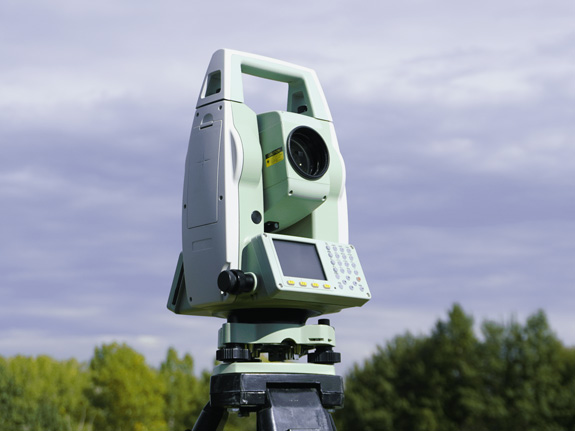
A total station isn’t just a straightforward device—it has several key parts that work together to give accurate readings. Here’s a look at the main components:
- Telescope: This part allows surveyors to aim at specific points. Surveyors use it to measure both horizontal and vertical angles. High-quality optics ensure a clear image, which is crucial for accurate measurements.
- Electronic Distance Measurement (EDM) Unit: This is the heart of the total station. It sends out electromagnetic waves (usually laser) to a target. The wave hits the target and bounces back to the station, and the EDM unit calculates the distance based on how long it took the wave to return.
- Electronic Data Collector: The data collector stores the measurements. It’s like a mini-computer that processes all the collected data. Without it, you’d have to write everything down by hand, which could lead to mistakes. The data collector makes everything faster and more accurate.
- strong>Internal Software: Inside the total station, there’s software that processes the information. This software does all the calculations for coordinates, distances, and even areas or volumes. It can also create reports or display maps directly on the screen.
How a Total Station Measures Distance
Measuring distance with a total station relies on sending a signal (typically a laser or electromagnetic wave). The signal travels to the target and bounces back. The total station measures the time it took for the signal to return. From there, the distance is calculated using the speed of light or sound, depending on the system.
This highly accurate method helps surveyors know precisely how far they are from the measuring point. It’s one of the reasons total stations are so reliable in construction and surveying.
How a Total Station Measures Angles
The total station measures distance and angles using a telescope to measure both horizontal and vertical angles.
- Horizontal angles help determine the position of objects in a straight line (left to right).
- Vertical angles measure the height difference between the instrument and the target (up and down).
- strong>Electronic Data Collector: The data collector stores the measurements. It’s like a mini-computer that processes all the collected data. Without it, you’d have to write everything down by hand, which could lead to mistakes. The data collector makes everything faster and more accurate.
These measurements are combined to determine the precise position of a point on the Earth’s surface.
Data Processing and Calculation
Once the total station has all the distance and angle measurements, it uses a process called triangulation to figure out the exact location of a point. Triangulation means using the measurements of angles and distances to create a triangle. When you know the angles and at least one distance, you can calculate the rest of the triangle’s properties, including the position of a point in space.
It allows surveyors to plot exact locations and distances, making the total station an essential surveying equipment in tasks like mapping and construction.
How Does Each Type of Total Station Work?
Different types of total stations have unique features that make them useful for specific tasks. Let’s take a look at how each one works and when you might use them:
1. Manual Total Stations
These total stations are the traditional kind. They require the operator to adjust the settings and aim the instrument physically. They’re a bit more hands-on, so getting the measurements you need can take longer. While they’re accurate, you’ll need to spend more time setting up and focusing the total station survey equipment.
2. Robotic Total Stations
Robotic total stations are more modern. You can control them remotely so the surveyor doesn’t have to stand beside the instrument. It makes the job faster and easier. Since people usually set up the instrument on a tripod, they can control it from a distance. It reduces walking around and boosts efficiency. It’s beneficial for larger areas or when you want to save time.
3. Reflectorless Total Stations
Unlike the other types, reflectorless total stations don’t need any particular target or reflective prism. They can measure the distance directly to the point they’re aiming at. This feature is perfect for places that are hard to reach, like tall buildings or across rivers, where setting up a target might be tricky. Reflectorless total stations make measuring these kinds of locations much simpler and faster.
Each type makes the surveying process more efficient, depending on the job you’re working on.
Common Uses of a Total Station
The total station plays a vital role in several industries, especially in land surveying, construction, and engineering.
- Land Surveying: Surveyors use total stations to measure and map land. It helps with property boundaries, creating accurate maps, and preparing land for development.
- Construction Projects: Total stations help workers build buildings and infrastructure according to exact specifications. Measurements taken by a total station ensure that walls, foundations, and other structures are in the right place.
- Engineering: Engineers use total stations to monitor the condition of roads, bridges, and other infrastructure. By regularly measuring key points, engineers can detect shifts, settling, or damage that may require maintenance.
Final Thoughts
A construction total station is a must-have tool for modern surveying and building projects. It gives precise distance and angle measurements, which help build accurate maps and structures. Whether you’re involved in land surveying, construction, or engineering, a total station ensures quick, reliable, and accurate measurements every time.
With its mix of advanced tech and easy-to-use features, a construction total station makes surveying work more efficient and helps avoid errors. If you work in surveying or construction, learning how a total station works will show you just how much it contributes to the accuracy and success of your projects.

Frequently Asked Questions
What is a total station?
A total station is a tool surveyors and construction workers use to measure distances and angles. It helps them create maps, measure land boundaries, and ensure the accuracy of construction projects.
How does a total station measure angles?
A total station uses a telescope to measure both horizontal (left to right) and vertical (up and down) angles. These angles help determine the exact location of a point on the ground.
Why is a total station important?
A total station is essential for accurate land surveying, construction, and engineering measurements. It helps surveyors measure land precisely and build buildings and infrastructure correctly.
Can a total station be used in all weather conditions?
Heavy rain, fog, or extreme temperatures can affect total station performance, even though they are built to work in different weather conditions. For the best accuracy, they should be used in clear, dry weather.
How do robotic total stations make surveying easier?
Surveyors can control robotic total stations remotely, so they don’t need to stand next to the instrument. It makes the surveying process faster and reduces the required walking time, especially for large areas.
For the best in
total station, check out the selection from
Engineer Supply.