
Most survey crews face the same pressure: tighter deadlines, limited manpower, demanding contractors, and projects that still need accurate layout and data collection. Traditional total station workflows often require two people: one person behind the instrument and another person holding the prism rod.
A robotic total station changes that workflow. With the right Leica TS13 configuration, one surveyor can control the instrument from the rod, collect measurements, complete layout and stakeout tasks, and reduce the need for a second person standing at the total station.
For small survey firms, construction layout crews, civil contractors, and growing teams, the Leica TS13 can help improve productivity, reduce labor strain, and support more efficient one-person surveying workflows.
Quick Answer: Can One Person Survey With a Robotic Total Station?
Yes. Many surveying, layout, and stakeout tasks can be completed by one person using a robotic total station, depending on the jobsite, safety requirements, project scope, and instrument configuration.
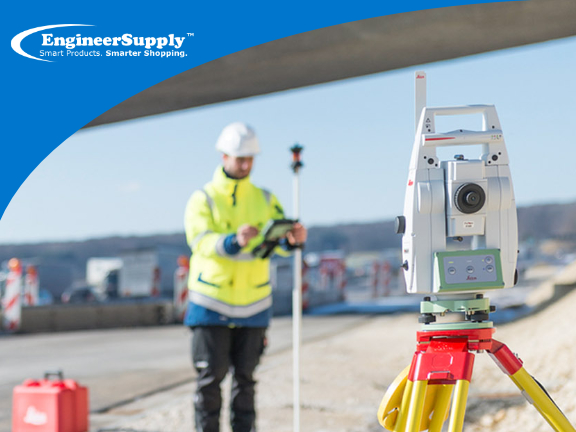
A Leica TS13 equipped for robotic operation allows the operator to work from the prism rod using a field controller. Instead of having one person aim the instrument and another person move the prism, the surveyor can control the workflow from the field.
That does not mean every project should always be handled by one person. Some jobsites still require extra personnel for safety, traffic control, communication, or complex layout work. But for many routine survey and construction layout tasks, a robotic total station can make one-person workflows practical and efficient.
What Is a Robotic Total Station?
A robotic total station is a motorized surveying instrument that can automatically aim, track a prism, and be controlled remotely from a field controller.
With a manual total station, the operator usually stays at the instrument and manually turns, sights, and measures to the prism. With a robotic total station, the instrument can follow the prism while the operator works from the rod position.
This helps reduce back-and-forth movement, improve field efficiency, and allow one person to complete many tasks that traditionally required two people.
Manual vs Robotic Total Station Workflow
| Task |
Manual total station workflow |
Robotic total station workflow |
| Instrument aiming |
Operator manually aims from the instrument |
Instrument can automatically aim and track the prism when properly configured |
| Crew size |
Often requires one person at the instrument and one person at the prism |
Many tasks can be completed by one operator at the prism rod |
| Stakeout workflow |
Requires communication between instrument operator and rod person |
Rod operator can view data and control the workflow from the field controller |
| Prism tracking |
Manual aiming and re-aiming |
Automated target recognition and tracking features can follow the prism |
| Productivity |
More dependent on crew coordination |
Less downtime between points and fewer trips back to the instrument |
| Best fit |
Basic survey tasks, training, lower-cost workflows |
Productivity-focused surveying, construction layout, and one-person workflows |
Leica TS13 Features That Support One-Person Surveying
The Leica TS13 is designed as a scalable robotic total station. Depending on the configuration, it can start with conventional workflows and be upgraded with automation features that support one-person field operations.
Automatic Target Recognition
Automatic Target Recognition, or ATR, helps the instrument identify and aim at the prism. Instead of manually sighting the prism for every measurement, the system assists with target recognition and measurement workflow.
For one-person surveying, ATR is important because it reduces the need for a second person to stand behind the instrument and manually aim at the prism.
When paired with the right workflow and accessories, ATR can help surveyors move more efficiently from point to point while maintaining consistent targeting.
Optional Target Lock and SpeedSearch
Some Leica TS13 configurations can be upgraded with target lock and SpeedSearch functionality. These features are especially helpful on active jobsites where the line of sight may be temporarily interrupted by vehicles, equipment, walls, people, or construction materials.
Target lock helps the instrument follow a moving prism. SpeedSearch helps the instrument find the prism more quickly when needed.
Because these capabilities can depend on the TS13 configuration, buyers should confirm which features are included before purchasing or upgrading.
AutoHeight Functionality
Instrument height is an important part of total station setup. Manual height measurement with a tape can introduce mistakes, especially when crews are moving quickly.
The Leica TS13 includes AutoHeight, which helps measure instrument height with a button press. This can reduce manual setup errors and speed up the beginning of a field workflow.
For one-person crews, faster setup matters because the same person is responsible for instrument setup, rod work, data collection, and quality checks.
Remote Operation With Leica Captivate
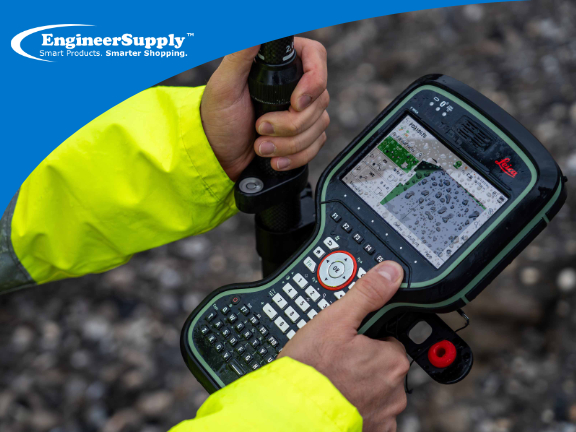
The Leica TS13 works with Leica Captivate field software and can be connected to a Leica CS20 field controller. This allows the surveyor to manage measurements, coding, linework, layout, and stakeout information from the field.
Instead of returning to the instrument to check data or make adjustments, the operator can control much of the workflow from the rod. This is one of the biggest reasons robotic total stations are valuable for one-person survey crews.
Reflectorless EDM Measurement Options
Some TS13 configurations include reflectorless EDM options, such as R500 or R1000 models. Reflectorless measurement allows a surveyor to capture certain points without placing a prism directly on the target.
This can help when measuring:
- Building faces
- High walls
- Elevated surfaces
- Roof edges
- Confined areas/li>
- Busy or hazardous locations
- Areas where prism placement is difficult
Reflectorless measurement does not replace every prism-based workflow, but it can make field work safer and more flexible in the right conditions.
Benefits of the Leica TS13 for Survey Crews
1. Increased Daily Productivity
Robotic total stations reduce downtime between measurements. On a stakeout job, the surveyor can move from point to point with the rod while controlling measurements from the field controller.
Instead of waiting for a second person to aim the instrument after every move, the robotic workflow helps the operator continue working across the site with fewer interruptions.
2. Lower Labor Requirements
A robotic total station can reduce the need for a two-person crew on many routine survey and layout tasks. That can help firms manage limited staff, reduce scheduling conflicts, and assign team members more strategically.
Potential savings include:
- Fewer labor hours per routine task
- Less scheduling complexity
- Lower transportation needs
- Better use of experienced field staff
- More flexibility for small crews
Labor savings will vary by job type, site conditions, safety needs, and local workflow requirements, but the operational advantage can be significant for firms that regularly perform layout or stakeout work.
3. Better Field Workflow Control
With robotic operation, the person at the rod can see the field data, measurements, and layout instructions directly on the controller. That means fewer hand signals, fewer radio calls, and less confusion between the instrument operator and rod person.
This can be especially helpful on noisy construction sites or larger jobsites where communication between two crew members is difficult.
4. Improved Measurement Consistency
Automation helps reduce common workflow errors. ATR supports consistent prism targeting, AutoHeight helps reduce manual instrument-height mistakes, and digital field workflows reduce handwritten notes and transcription issues.
This can lead to cleaner data, fewer corrections, and fewer follow-up checks after fieldwork is complete.
5. Faster Project Completion
One-person robotic workflows can reduce setup delays, measuring delays, and unnecessary trips back to the instrument. Over the course of a full day, those small time savings can add up.
For crews working on construction layout, utilities, site development, and stakeout tasks, faster field completion can help keep projects moving and improve turnaround times for clients.
6. Better Access to Difficult Areas
Reflectorless measurement and remote workflow control can help surveyors work more efficiently around difficult or hazardous areas.
Examples include:
- Traffic medians
- Steep grades
- Retaining walls
- Elevated surfaces
- Congested construction zones
- Utility corridors
- Areas where prism setup would be unsafe or time-consuming
The surveyor still needs to follow proper safety procedures, but robotic and reflectorless capabilities can reduce unnecessary exposure in certain field conditions.
7. Fewer Return Trips to the Site
Accurate field data and cleaner digital workflows can reduce missing shots, unclear notes, and measurement mistakes. When data transfers properly into office software such as Leica Infinity, crews may spend less time revisiting sites to correct incomplete or inaccurate information.
Fewer return trips can save:
- Labor hours
- Fuel costs
- Vehicle time
- Administrative follow-up
- Project delays
8. More Professional Field Presentation
Modern robotic survey equipment can also improve how a crew presents itself to clients, contractors, and project managers. A one-person robotic workflow shows that a company is investing in efficient field methods and professional-grade technology.
That can help build confidence with clients who expect fast, accurate, and well-organized survey work.
Who Should Consider a Leica TS13 Robotic Total Station?
The Leica TS13 can be a strong fit for:
- Small survey firms trying to do more with limited staff
- Construction layout crews
- Civil engineering and site development teams
- Utility layout and as-built crews
- Contractors that handle frequent stakeout work
- Firms upgrading from manual total stations
- Crews that want a scalable path into robotic surveying
- Surveyors who want to reduce repeat trips between the rod and instrument
It is especially useful when a crew regularly performs repetitive layout, stakeout, or data collection tasks where automated prism tracking and remote operation can reduce downtime.
Leica TS13 Configuration Options
One of the strongest advantages of the TS13 platform is scalability. A firm does not always need to start with the most advanced robotic configuration immediately. The instrument can support a gradual upgrade path as workflow needs grow.
| Configuration |
Capability |
Best for |
| Basic setup |
Conventional total station workflows |
Crews that still use two-person operation or are transitioning from manual methods |
| Add ATR |
Automatic target recognition and assisted prism aiming |
Faster targeting and more efficient field measurements |
| Add target lock |
Helps follow a moving prism |
Crews that want stronger support for robotic field workflows |
| Add SpeedSearch |
Helps find the prism more quickly |
Jobsites where line of sight may be interrupted |
| Add radio handle and controller connectivity |
Enables remote field operation |
One-person surveying, layout, and stakeout workflows |
| Add reflectorless EDM option |
Allows selected measurements without a prism |
Hard-to-reach, elevated, or unsafe target areas |
Before purchasing, confirm the exact TS13 package, EDM range, controller, radio handle, software, and robotic features included with the configuration.
Common Mistakes When Upgrading to Robotic Surveying
Assuming every TS13 package includes every feature
The Leica TS13 is scalable, which means features can vary by package and configuration. Confirm whether ATR, target lock, SpeedSearch, reflectorless EDM range, controller connectivity, and radio handle options are included.
Focusing only on the instrument
A robotic workflow depends on more than the total station. You may also need the right field controller, radio handle, prism, pole, tripod, software, batteries, chargers, and office workflow.
Ignoring training
Robotic total stations can make crews more efficient, but only when operators know how to use the workflow correctly. Training matters, especially for stakeout, target tracking, setup checks, coding, data transfer, and troubleshooting.
Using one-person crews when the site requires two people
Robotic equipment can reduce crew size for many tasks, but it does not replace safety planning. Traffic areas, hazardous sites, complex construction zones, and high-risk environments may still require additional personnel.
Skipping calibration and service
A robotic total station is still a precision instrument. Regular maintenance, calibration, and software updates help protect accuracy and reduce downtime.
Is a Robotic Total Station Worth It for a Small Survey Crew?
For many small crews, a robotic total station can be worth the investment if it is used regularly for layout, stakeout, as-built work, or repeated field measurement tasks.
The value usually comes from:
- Completing more work with fewer people
- Reducing downtime between shots
- Improving field workflow control
- Reducing manual aiming and communication delays
- Supporting cleaner digital data collection
- Helping experienced surveyors work more independently
The return on investment depends on how often the instrument is used, what type of projects the firm handles, and how much time is saved in the field.
Request a Leica TS13 Quote or Service Support
Need help choosing the right Leica TS13 configuration for one-person surveying? EngineerSupply can help compare robotic total stations, controllers, radio handles, prisms, tripods, software, and service options.
For a quote or personalized guidance:
Call or Text: 434-755-7717
Email: sales@engineersupply.com
Need assistance with your Leica TS13 robotic total station?
Our service repair team can help with Leica TS13 setup, troubleshooting, calibration, diagnostics, and general maintenance support.
Customer Support: 800-591-8907
Repairs & Maintenance: Call or Text 434-200-8477
Frequently Asked Questions About Robotic Total Stations and One-Person Surveying
What is a robotic total station?
A robotic total station is a motorized surveying instrument that can automatically aim, track a prism, and be controlled remotely from a field controller. It allows many survey and layout tasks to be completed with fewer trips back to the instrument.
Can one person use a robotic total station?
Yes. Many surveying, layout, and stakeout tasks can be completed by one trained operator using a properly configured robotic total station. However, safety conditions and project requirements may still require additional crew members.
How does the Leica TS13 help one-person survey crews?
The Leica TS13 supports one-person workflows through scalable robotic features, Leica Captivate field software, controller connectivity, AutoHeight, ATR, and optional target lock and SpeedSearch capabilities depending on configuration.
What is ATR on the Leica TS13?
ATR stands for Automatic Target Recognition. It helps the total station recognize and aim at the prism, reducing the need for manual targeting.
What is SpeedSearch on a Leica total station?
SpeedSearch helps the instrument find the prism more quickly. On a robotic workflow, this can reduce downtime when the prism is lost or line of sight is interrupted.
Does the Leica TS13 work with Leica Captivate?
Yes. The Leica TS13 works with Leica Captivate field software, which supports measurement, coding, linework, layout, and field data workflows.
Does the Leica TS13 work with a CS20 controller?
Yes. The Leica TS13 can be connected to a Leica CS20 field controller, depending on the setup and configuration.
What is AutoHeight on the Leica TS13?
AutoHeight helps measure the instrument height with a button press. This can reduce manual setup errors and speed up field setup.
Can the Leica TS13 measure without a prism?
Some TS13 configurations include reflectorless EDM options, such as R500 or R1000 models. These allow selected measurements without placing a prism directly on the target.
A manual total station usually requires an operator at the instrument to aim and measure. A robotic total station can be controlled remotely and can track the prism automatically when properly configured.
Is a robotic total station worth it for small survey firms?
It can be, especially for firms that perform frequent layout, stakeout, or field data collection. The value comes from reduced crew requirements, faster workflows, and better field productivity.
When should a Leica TS13 be serviced or calibrated?
Schedule service or calibration if the instrument has been dropped, shows repeated measurement errors, struggles with target lock, has AutoHeight inconsistencies, or is due for routine annual calibration.
More Leica TS13 Resources