
In surveying and construction, exact measurements are key to keeping projects on track. Nikon and Sokkia offer high-performance instruments designed for fieldwork, from construction layouts to topographic surveys. As trusted surveying equipment, both brands focus on different strengths. Nikon is known for clear sighting and simple operation, while Sokkia is built to handle tough conditions and supports flexible data handling. Knowing these differences will help you choose the tool that keeps your projects productive, consistent, and smooth.
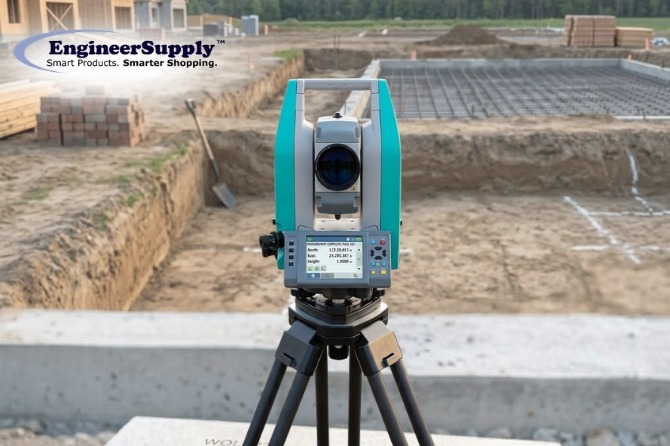
What is Nikon Total Station?
A Nikon Total Station is a tool used in surveying, construction, and engineering to measure angles, distances, and points on a site. Models like the nikon n series total station, nikon k series total station, nikon xf total station, and nikon xs total station
They have bright optics for clear sighting, even in low light, and can measure to prisms or directly to points without prisms for long or hard-to-reach distances. Data can be stored inside and sent to computers or field controllers using Bluetooth or USB, and hot-swappable batteries let teams work all day without stopping. Finding the best nikon total station for your team simply depends on matching these features to your specific accuracy and project needs.
What Are the Features of Nikon Total Station?
Nikon Total Stations are made for surveyors and construction teams who need clear measurements and smooth data handling. The telescope lets you sight points easily, while the device records angles and distances for use on-site or later.
These instruments are built to work on busy job sites. Data can be transferred through USB or Bluetooth, and the lightweight design makes them easy to carry. Features like hot-swappable batteries, dual-face screens, and autofocus (XF/XS models) keep work moving all day. Nikon stations are ideal when clear sighting, easy data management, and portable tools matter most.
When to Use Nikon Total Stations?
Nikon Total Stations are great for projects where clear measurements and easy data handling matter. They work well in different light conditions and for jobs that need careful point-to-point measurements.
Typical uses include:
- Construction Layouts: Marking building points or transferring digital plans to the field.
- Land Surveying: Measuring property lines, boundaries, or creating topographic maps.
- Civil Engineering: Checking roads, bridges, and other structures for shifts or settling.
- Special Projects: Mapping tunnels, archaeological sites, or other areas where precise measurements are needed.
- Long Field Days: Hot-swappable batteries and clear optics make it easier to work all day.
Pros and Cons of Nikon Total Stations
Before choosing a Nikon Total Station, it’s helpful to know where it excels and where it may have limitations. These instruments are built for surveyors and construction teams who value clear sighting, easy data handling, and field-ready usability.
Pros
- Clear Optics: Bright, sharp lenses make it easy to see targets even in low-light conditions.
- Long Battery Life: Hot-swappable batteries let you work all day without interruption.
- Portable Design: Lightweight and easy to carry between job sites.
- Simple Software: Onboard software like Survey Pro is easy to navigate for fast measurements.
- Good Value: Offers dependable performance at a lower cost than more complex brands.
Cons
- Less Advanced Features: Lacks some high-end automation and cutting-edge tools found in premium brands
- Software Learning Curve: Users switching from other systems may need time to adjust.
- Manual Setup: Requires precise setup and unobstructed line-of-sight for accurate readings.
- Regular Calibration Needed: To maintain accuracy, yearly or periodic calibration is recommended.
In short, Nikon Total Stations are perfect for projects that need clear sighting, manageable data handling, and portability, while high-tech, fully automated tasks may require a different system.
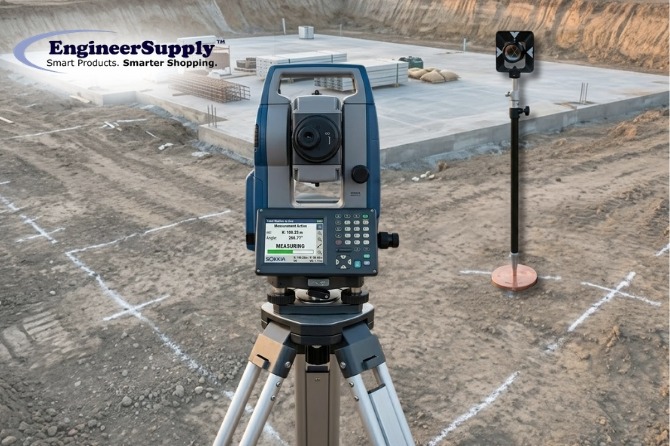
What is Sokkia Total Station?
A Sokkia Total Station is a surveying tool used to measure distances, angles, and positions on a construction or engineering site. It combines a digital theodolite with an electronic distance meter (EDM) to capture accurate points for layouts, mapping, and project planning.
Sokkia Total Stations are built to be easy to handle and operate in the field. They store data internally and can transfer measurements to computers or controllers, making it simple to plan, record, and manage site work. These instruments are ideal for tasks that require precise measurements, whether it’s marking building foundations, mapping land, or tracking infrastructure changes.
What Are the Features of Sokkia Total Station?
Sokkia Total Stations help surveyors and construction teams measure angles, distances, and points accurately. They can measure with prisms or without, making it easy to reach far or hard-to-access spots.
They can store a lot of data and send it to computers or controllers using USB or Bluetooth. Many models keep measurements steady with dual-axis compensation and have built-in software for layouts, surveys, or site calculations.
Batteries last all day, so work can continue without interruption. Some models include extra tools like laser pointers or robotic functions, which let one person do work that usually needs two.
When to Use Sokkia Total Station?
Sokkia total stations are ideal for projects where precise measurements are needed across a site. They are especially useful when a surveyor needs to record points quickly and manage data without constant manual adjustments.
They are commonly used in:
- Construction Layout: Setting building corners, walls, and anchor points.
- Land Surveys: Measuring property lines, terrain, or creating detailed 3D maps.
- Civil Engineering Projects: Laying out roads, bridges, and other infrastructure.
- Mining & Excavation: Checking slopes, measuring volumes, and tracking progress.
- Hard-to-Reach Points: Measuring tall structures or facades safely without risking the crew.
- On-Site Data Collection: Quickly capturing measurements and transferring them via Bluetooth or USB.
Using a Sokkia total station helps keep measurements accurate across the site while reducing the time and effort needed from the survey team.
Pros and Cons of Sokkia Total Station
Before choosing a Sokkia total station, it’s helpful to know what it excels at and where it may not be necessary. These instruments work well for projects that need accurate measurements and long field operation, but they might be more than needed for small or simple jobs.
Pros
- Accurate Measurements: Can measure long distances without a prism and capture precise points quickly.
- Durable Design: Built to handle dust and water, keeping the instrument working in tough conditions.
- One-Person Use: Some robotic models let a single surveyor manage layout and measurements.
- Easy Data Transfer: Built-in software plus Bluetooth and USB make moving data to computers simple.
- Long Battery Life: Many models last all day, supporting extended work without interruption.
Cons
- Software Takes Time to Learn: New users may need time to become familiar with the onboard software.
- Maintenance Needs: Robotic motors and electronics need routine checks to stay accurate.
- Tracking Limitations: Automated target tracking is not as advanced as some high-end brands.
- Connectivity Glitches: Occasionally, data transfer or robotic functions may be slow or unresponsive.
In short, Sokkia total stations are best for projects that require precise measurements, long field operation, and fewer crew members. For small sites or simple tasks, a simpler total station might be easier and faster to use.
Nikon vs Sokkia Total Stations: Price Comparison
| Model / Category |
Nikon Total Station Price (USD) |
Sokkia Total Station Price (USD) |
| Entry / Basic Units |
~ $4,400+ (N & K Series) |
$6,554.99 (iM‑50 Reflectorless) |
| Mid‑Range Reflectorless |
~$9,900+ (XS Series) |
$11,589.99 (iM‑100 Series) |
| Advanced Reflectorless |
~$11,400+ (XF Series) |
$13,679.99 (FX‑200 Series) |
| Robotic / High‑End |
(Nikon robotic models not common / custom quote) |
$33,249.99 (NET AX2 Automated 3D Station) |
|
|
$34,830.00 (iX‑1200 Series Robotic) |
Choosing between these brands depends on the accuracy you need and your budget. While Sokkia is a top choice for high-end robotic tools, many crews prefer the Nikon total price because it is a budget-friendly way to get high-quality equipment for manual and reflectorless surveying.
Nikon vs Sokkia Total Stations
When choosing a total station, it’s important to consider the features, operation, and project needs. Nikon instruments work well for manual and semi-manual surveying, with clear optics and easy sighting, while Sokkia units, including robotic models, provide automated functions and additional tools for precise measurements and single-person use.
| Feature |
Nikon Total Station |
Sokkia Total Station |
| Purpose |
Measures angles, distances, and points for construction, land, and civil projects |
Measures angles, distances, and points for construction, land, and civil projects |
| Operation Style |
Mostly manual or semi-manual, simple setup |
Manual and some robotic models for single-person operation |
| Optics & Sight |
Bright, clear optics for easy sighting in low light |
Clear optics, built for steady measurements in varied site conditions |
| Distance Measurement |
Prism or reflectorless; long distances up to ~800m |
Prism or reflectorless; long distances up to ~800m, some robotic models auto-track |
| Data Handling |
Stores points internally; Bluetooth & USB for easy transfer |
Stores points internally; Bluetooth & USB; some models support robotic data capture |
| Battery & Power |
Hot-swappable batteries for all-day field use |
Long-lasting batteries; robotic models may require more power |
| Portability |
Lightweight and easy to carry |
Portable; robotic units slightly bulkier |
| Durability |
Built for typical construction sites; handles dust and water |
Water- and dust-resistant; handles tougher, long field use |
| Automation & Tech |
Limited automation; focus on clear sighting and simplicity |
Robotic models allow one-person operation; dual-axis compensation for stability |
| Software |
Survey Pro, basic onboard software for layout and surveys |
SDR Basic and other onboard software; supports layouts, surveys, and calculations |
Best For |
Projects needing clear sighting, portable tools, and simple data handling |
Projects needing precise measurements, long field operation, or fewer crew members |
Limitations |
Less advanced automation; requires line-of-sight; periodic calibration |
Learning curve for software; robotic models need maintenance; automated tracking not as advanced as top-tier brands |
Nikon vs Sokkia Total Stations: Which Should You Choose?
Choosing between Nikon and Sokkia depends on your project needs.
Nikon Total Stations are ideal for projects that need clear sighting, simple operation, and lightweight instruments for daily fieldwork.
Sokkia Total Stations are better for larger or demanding sites where strong data handling and robotic options help surveyors manage measurements across the project.
Ready to Pick the Right Total Station?
At Engineer Supply , we help surveyors and construction teams find the total station that fits your project. Whether you need the clear sighting and simplicity of a Nikon or the advanced data handling and robotic options of a Sokkia, our team can guide you to the right choice.
For a Quote or Personalized Advice: Contact our sales team.
Call or Text: 434-755-7717 | Email: sales@engineersupply.com
Need Help with Your Total Station?
If you have questions about ordering, setup, or keeping your Nikon or Sokkia total station performing accurately, we’re here to help. Our Service repair team can assist with general inquiries, while our technicians handle calibration, repair, and maintenance to ensure your instruments are always field-ready.
Customer Service: 800-591-8907
Repairs & Maintenance: Call or Text 434-200-8477
More Articles on Nikon