
The best Nikon total station depends on three factors:
1. Angular accuracy (2″ for engineering & boundary work, 5″ for construction layout).
2. Measurement type (reflectorless for flexibility, prism-only for cost efficiency)
3. Field workflow needs (battery runtime, Bluetooth data transfer, charging flexibility)
For most construction professionals, a 5″ reflectorless model provides the best balance of cost and performance. For boundary and high-precision engineering, 2″ models are recommended.
Why Nikon Total Stations Are Trusted in Surveying
Nikon instruments are known globally for optical clarity, EDM reliability, and mechanical durability. The Nikon N & K Series Total Stations are designed for professionals who want:
- Proven optical performance
- Strong EDM accuracy
- USB-C charging flexibility
- Bluetooth connectivity
- Rugged mechanical reliability
Unlike robotic systems, these mechanical total stations reduce complexity and maintenance costs while maintaining professional-grade precision.
Step-by-Step Guide: Choosing the Best Nikon Total Station
Selecting the right Nikon total station requires more than just picking the model with the highest specs. Each choice affects field efficiency, data quality, and long-term costs. The following steps provide a structured approach, ensuring your decision aligns with accuracy requirements, workflow needs, and project types.
Step 1: Choose the Right Accuracy (2″ vs 5″)
2″ Accuracy – For Precision & Legal Work
Best for:
- Boundary surveys
- Control networks
- Structural alignment
- Engineering-grade measurements
Why it matters:
A smaller angular error translates to tighter control over long distances. When surveying bridges, high-rise structures, or cadastral boundaries, even minor deviations can result in significant positional errors.
Recommended Models:
- N Series 2″ (Reflectorless) – Ideal for precise single-operator measurements and inaccessible targets.
- K Series 2″ (Prism Only) – Perfect for teams using prisms consistently in open terrain.
5″ Accuracy – For Construction & Site Work
Best for:
- Utility layout
- Residential or commercial site development
- Grading and earthworks
- General construction tasks
Why it’s often enough:
Most construction projects have tolerances of several centimeters, making 5″ instruments sufficient. They offer a balance of precision, durability, and cost-effectiveness.
Recommended Models:
- N Series 5″ (Reflectorless) – Maintains speed and portability for fast-paced construction sites.
- K Series 5″ (Prism Only) – Lower-cost alternative for consistent prism-based workflows.
Many teams overspend on 2″ models when 5″ fully meets project requirements. Evaluate your longest survey line and acceptable tolerance before choosing.
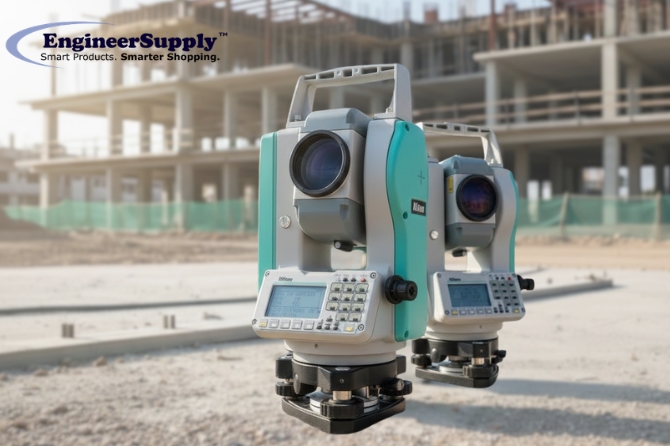
Step 2: Reflectorless vs Prism-Only Measurement
Reflectorless (N Series)
Ideal if you:
- Measure surfaces that are hard to access or hazardous
- Work near traffic, utilities, or restricted areas
- Prefer one-person operation for efficiency
Performance:
- Reflectorless accuracy: ±(3 + 2 ppm × D) mm
- Prism accuracy: ±(2 + 2 ppm × D) mm
- Single prism range: up to 4,000 m
Advantages:
- Reduces field setup time
- Increases safety by avoiding dangerous or obstructed areas
- Supports faster data collection for high-productivity workflows
Prism-Only (K Series)
Ideal if you:
- Use prisms consistently for long-distance shots
- Operate primarily in open terrain
- Want a lower-cost, durable solution
Performance:
- Prism accuracy: ±(2 + 2 ppm × D) mm
Advantages:
- Cost-effective and reliable for teams with traditional workflows
- Excellent for open construction sites and road grading
- Less sensitive to low-contrast or reflective surfaces
Reflectorless instruments improve safety and speed but come at a premium. Prism-only may be the smarter choice for routine projects with easy prism placement.

Step 3: Evaluate Optical Performance
Nikon total stations are known for high-quality optics, which significantly improve efficiency and reduce eye fatigue. Consider the following features:
- Magnification:30×, providing clear views over long distances
- Objective lens:45 mm, enhancing brightness and contrast
- Field of view:1°20′, ideal for precise targeting
- Erect image telescope:Correct orientation for intuitive sighting
Why it matters:Clear, sharp optics are essential for dusty or low-light environments, long observation sessions, and complex targeting tasks. Investing in good optics reduces errors and speeds up field work.
Step 4: Battery & Charging Flexibility
Modern surveying demands mobility. Total stations must perform reliably on remote sites without constant access to power.
Key Features:
- USB-C charging allows connection topower banks, vehicle chargers, or standard outlets
- Objective lens:45 mm, enhancing brightness and contrast
- Minimum input requirement: 5 V / 1 A
- Hot-swappable batteries for uninterrupted field operation
Battery Runtime:
- K Series: up to 22 hours
- N Series: up to 14 hours
Why it matters:Charging flexibility often matters more than raw runtime. Instruments that allow field charging keep projects on schedule, especially for extended surveys or multi-site operations.
Pro tip:Carry at least one spare battery per crew to avoid downtime on critical projects.
Step 5: Connectivity & Data Management
Efficient data handling is essential for modern survey workflows. The wrong instrument can slow down the office handoff, increase transcription errors, and delay project delivery.
Key Features:
- 50,000-point internal memory
- Bluetooth and NFC pairing for wireless connections
- Fast file transfer through USB or dedicated apps
- Compatibility with Nikon Survey Software (NSS)for Windows tablets and standard file formats (.csv, .dxf, LandXML)
Benefits:
- Reduces time from field to office
- Minimizes manual data entry errors
- Fast file transfer through USB or dedicated apps
- Supports high-volume projects with seamless workflow integration
If your firm uses drone photogrammetry, LiDAR, or GNSS modules, verify that your chosen Nikon model supports direct coordinate integration to maximize efficiency.
Step 6: Environmental Durability
Survey instruments face real-world hazards: dust, rain, vibration, and extreme temperatures. Choose a model that withstands the conditions you expect in the field.
- N Series:IP55 rated (dust-protected, water-jet resistant)
- Nivo / K Series:IP54 rated (dust-protected, splash-resistant)
Temperature-compensated EDM systems and robust mechanical design maintain accuracy across -20°C to +50°C ambient conditions. Investing in rugged instruments avoids costly downtime and rework.
Step 7: Application-Specific Considerations
Different surveying tasks require specific instrument features:
- Construction Layout:Prioritize speed, portability, and ease of setup (e.g., Nivo or XS Series)
- Boundary Surveys:High angular accuracy and stable prism tracking are essential (e.g., N 2″ or K 2″)
- Topographic Mapping:Long-range EDM and GNSS integration (e.g., N14/N20 with LRR or GNSS module) reduce field time for large sites
Matching your instrument to the type of work ensures efficiency, accuracy, and long-term ROI.
Step 8: Support, Service, and Long-Term Viability
Nikon’s total stations are now supported via Trimble’s global network, providing broader service and software integration. Before committing:
- Verify local authorized service center
- Confirm warranty and parts availability for at least 5 years
- Ensure software updates and calibration access for high-precision models
Pro tip: Investing in a supported instrument reduces risk and protects your long-term project workflow.
Step 9: Test Before Purchase
Nothing beats real-world evaluation:
- Rent or demo shortlisted models on an actual project
- Measure setup time, point capture speed, and battery performance
- Evaluate data transfer, GNSS integration, and reflectorless performance under real field conditions
Field testing ensures your choice meets expectations and avoids costly surprises.
Step 10: Strategic Decision
Choosing the best Nikon total station is about aligning project needs with instrument capability. Use this framework:
- Map your recurring tasks
- Identify required precision, range, and workflow features
- Calculate total cost of ownership (purchase, service, batteries, software)
- Confirm field durability and support access
By making decisions based on data and real-world workflow, your total station investment delivers consistent, accurate, and efficient results for years.
Making the Right Nikon Total Station Choice
Choosing the right Nikon total station is more than comparing specs, it’s about matching your instrument to your workflow, project requirements, and long-term productivity goals. A carefully chosen total station can:
- Save hours on data collection and field setup
- Minimize errors caused by poor visibility or harsh conditions
- Reduce downtime thanks to rugged design and flexible power options
- Streamline office-to-field data transfer with Bluetooth, NFC, and USB-C connectivity
- Provide confidence that your measurements meet legal, engineering, or construction tolerances
Engineer Supply: Your Partner for Nikon Total Stations
Choosing the right total station is an investment in better measurements, smoother workflows, and dependable performance. Nikon N & K Series instruments offer clear optics, precise EDM, USB‑C charging, Bluetooth connectivity, and rugged durability for any survey project including construction, boundary, or control work.
At Engineer Supply, we provide expert guidance, authorized Nikon products, and fast, reliable service to help you get the right instrument for your workflow.
For a Quote or Personalized Guidance: Contact our sales team.
Call or Text: 434-755-7717 | Email: sales@engineersupply.com
Need Support With Your Nikon Total Station?
If you have questions about ordering, setup, or keeping your Nikon total station working properly, we’re here to help. Our Service repair team can assist with purchases and general inquiries, while our technicians handle calibration, repair, and maintenance to keep your instruments field-ready and performing at their best.
Customer Service: 800-591-8907
Repairs & Maintenance: Call or Text 434-200-8477
More Articles on Nikon