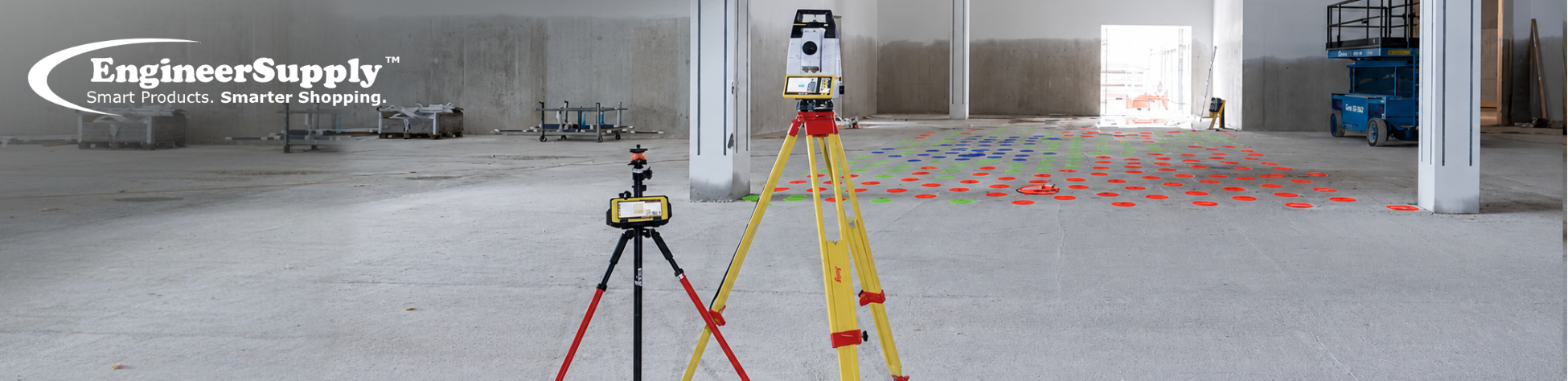
In modern surveying, choosing the correct measurement mode on a total station directly affects accuracy, efficiency, and field reliability.
The Leica TS13 Total Station supports both:
- Prism measurements
- Reflectorless (direct laser return) measurements
While both methods measure distance using EDM (Electronic Distance Measurement), they behave differently depending on:
- surface type
- distance
- atmospheric conditions
- field setup
Understanding these differences helps reduce measurement errors and improves survey confidence in real-world conditions.
What is the Leica TS13 Measurement System?
The Leica TS13 uses EDM technology to calculate distance using a laser beam.
It supports two measurement workflows:
1. Prism Mode
Uses a reflective prism target to return a strong, stable laser signal.
2. Reflectorless Mode
Measures distance by bouncing the laser directly off a surface without a prism.
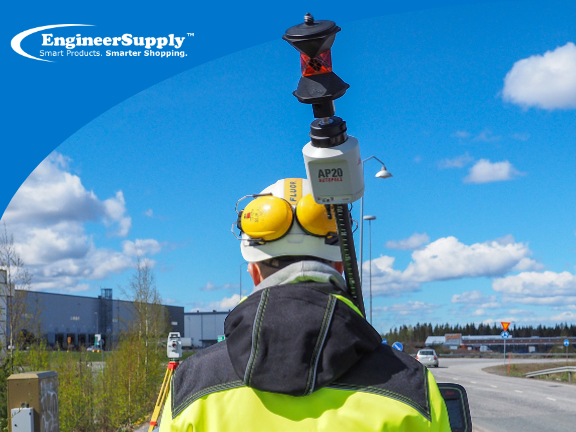
Prism Measurement in Leica TS13
How Prism Mode Works
Prism measurement uses a reflective target (prism) placed at the point being measured. The total station sends a laser beam to the prism, which reflects it back to the instrument. Distance is calculated based on the returned signal.
Because the signal is efficiently reflected back to the instrument, prism mode provides highly stable and repeatable results, even over long distances.
Typical Accuracy
- Generally around millimeter-level precision (≈ ±1–2 mm + ppm depending on setup and distance)
- Performance remains stable over long ranges when properly set up
When to Use Prism Mode
Use prism mode for:
- Control points and benchmarks
- Construction layout (columns, foundations, gridlines)
- Long-distance measurements
- High-precision engineering work
Advantages of Prism Mode
- Very high and consistent accuracy
- Minimal influence from surface texture or lighting
- Excellent long-range performance
- Reliable for control and engineering-grade work
Limitations
- Requires physical access to the point or a prism operator
- Slower workflow due to setup and alignment
- Requires coordination in multi-person surveying tasks
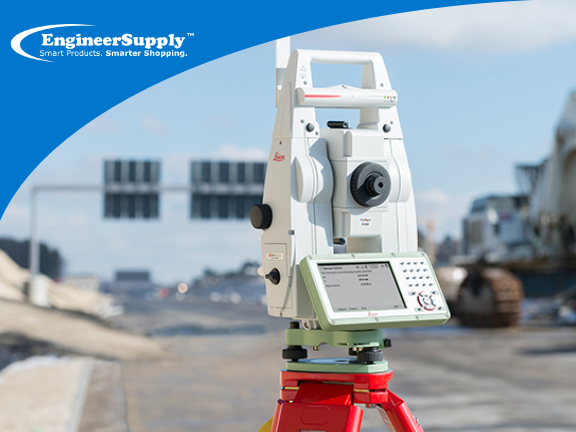
Reflectorless Measurement in Leica TS13
How Reflectorless Mode Works
Reflectorless measurement does not require a prism. The laser reflects directly off the surface being measured and returns to the instrument.
This allows fast measurement of points that are unsafe, inaccessible, or time-consuming to reach.
Typical Accuracy (Practical Field Range)
- Generally lower and more variable than prism mode (often ±2–5 mm + ppm or more depending on conditions)
- Accuracy decreases with distance and poor surface reflectivity
Best Applications
Reflectorless mode is useful for:
- Building facades and walls
- Road edges and terrain surfaces
- Unsafe or inaccessible areas
- Rapid topographic surveys
Limitations in the Field
Reflectorless performance is affected by:
- Surface type (dark, shiny, or highly reflective materials reduce accuracy)
- Distance (accuracy degrades as range increases)
- Angle of incidence (steep angles increase error risk)
- Environmental conditions (heat shimmer, fog, rain, or strong sunlight)
It is generally not recommended for high-precision control work.
Cost Comparison: Prism vs Reflectorless in Leica TS13
Prism Measurement
- Higher overall field cost
- Requires prism, pole, and additional accessories
- May need a second operator (adds labor cost)
- Slower workflow increases project time
Reflectorless Measurement
- Lower overall field cost
- No prism or extra field accessories needed
- Can be done by a single operator
- Faster workflow reduces labor and time cost
Prism involves higher cost but delivers a more precise workflow, while reflectorless offers lower cost and faster field productivity.
The Differences: Prism vs Reflectorless
| Feature |
Prism Measurement |
Reflectorless Measurement |
| Accuracy |
High and stable |
Moderate, condition-dependent |
| Target Required |
Yes |
No |
| Speed |
Slower (setup required) |
Faster (direct measurement) |
| Best Use |
Control points, layout, long distances |
Topography, façades, inaccessible points |
| Surface Sensitivity |
Low |
High |
| Range Performance |
Excellent over long distances |
Best at short to medium range |
| Reliability |
Very consistent |
Variable depending on conditions |
| Field Safety |
Requires access to point |
Safer for hazardous or unreachable areas |
How to Choose the Right Mode (Field Decision Logic)
Use this simple workflow:
Step 1: Is the point accessible?
- Yes → Go to Step 2
- No → Use Reflectorless
Step 2: Is high accuracy required?
- Yes → Use Prism
- No → Go to Step 3
Step 3: Is speed more important than precision?
- Yes → Reflectorless
- No → Prism
Step 4: Is the surface difficult (dark/shiny/angled)?
- Yes → Prefer Prism
- No → Either mode acceptable
Speed and Workflow Differences
Prism Mode
- Requires setup (prism placement, leveling, coordination)
- Typically slower but more controlled and precise workflow
Reflectorless Mode
- Single-operator capable in many cases
- Faster data capture for large surface areas
- Ideal for rapid surveys and preliminary mapping
Common Field Mistakes to Avoid
Many surveying errors come from incorrect mode selection:
- Using reflectorless mode for high-precision layout work
- Measuring long distances in reflectorless mode without validation
- Ignoring surface reflectivity and angle effects
- Failing to verify control points before proceeding with layout
Avoiding these mistakes significantly improves accuracy and reduces costly rework.
Prism or reflectorless which one fits your next job?
Prism and reflectorless measurements are not competing methods; they are complementary tools designed for different field conditions.
The Leica TS13 Total Station enables both workflows, allowing surveyors to switch efficiently between precision and speed depending on site requirements.
- Prism = precision, stability, and reliability
- Reflectorless = speed, flexibility, and accessibility
The best surveying results come from selecting the right method for each task, not relying on a single mode for all conditions.
For the right equipment options, Engineer Supply can support your Leica surveying needs.
For a quote or personalized guidance:
Call or Text: 434-755-7717
Email: sales@engineersupply.com
Need assistance with your Leica TS13 total station?
Our service repair team can help with Leica TS13 prism and reflectorless measurement setup, troubleshooting, calibration, diagnostics, and general maintenance support.
Customer Support: 800-591-8907
Repairs & Maintenance: Call or Text 434-200-8477
FREQUENTLY ASKED QUESTIONS
Which is more accurate on Leica TS13: prism or reflectorless?
Prism mode is more accurate and stable because it uses a controlled reflective signal. Reflectorless accuracy varies depending on surface and environmental conditions.
When should I use reflectorless mode?
Use reflectorless mode when the point is inaccessible, unsafe, or when speed is more important than high-precision control.
Can reflectorless replace prism measurements?
No. Reflectorless is best for surface mapping and quick measurements, while prism mode is required for precise control and engineering work.
Why does reflectorless accuracy change?
It changes due to surface reflectivity, angle of incidence, distance, and atmospheric conditions affecting the laser return signal.
What is the main advantage of prism mode?
Prism mode provides highly stable, repeatable, millimeter-level accuracy over long distances with minimal environmental influence.
Where to buy the Leica TS13 total station?
The Leica TS13 total station can be purchased from authorized surveying equipment dealers such as Engineer Supply, a trusted provider of Leica surveying instruments and accessories.
More Leica TS13 Resources