Setting correct elevations is one of the most important steps in construction layout. Even a small mistake in height can lead to uneven concrete slabs, drainage problems, rework, and project delays.
That’s why many contractors and site engineers use a rotary laser level tool that creates fast, consistent, and reliable elevation references across the entire job site.
Modern systems like the Leica Geosystems Rugby Series rotary lasers are commonly used in construction because they help reduce human error and support steady grade control even in tough site conditions.
What Is a Rotary Laser Level?
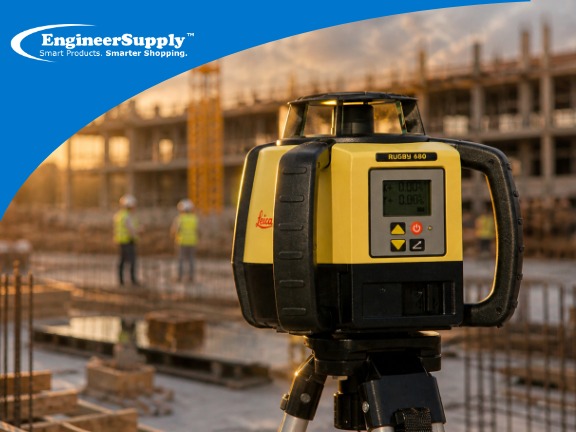
A rotary laser level is a tool used on construction sites to help set and check height levels. It spins a laser light in a full circle so workers can see a straight level line anywhere on the site.
With a receiver and a measuring rod, workers can see if the ground is higher or lower in different spots. This helps them set the same height level from one area to another.
It is commonly used for:
- Setting the height of building foundations
- Making sure concrete floors are even
- Checking and shaping the ground level on site
- Preparing slopes for water drainage
- Leveling roads and pavements
- Setting the correct height for forms before pouring concrete
Step-by-Step: How to Set Elevations with a Rotary Laser Level
Step 1: Establish a Benchmark Elevation
Start with a known reference point (benchmark). This will serve as the base elevation for the entire site.
- Usually provided by survey data or site engineer
- Must be verified before work begins
Step 2: Set Up the Rotary Laser Level
Place the unit on a tripod or stable surface with a clear line of sight across the job site.
- Ensure no vibration or movement
- Position at a central location for best coverage
Step 3: Let the Laser Set Itself
Once powered on, the laser automatically self-levels to create a consistent horizontal plane.
- Wait for leveling indicator to stabilize
- Avoid disturbing the unit during this process
Step 4: Use a Receiver and Grade Rod
A laser receiver attached to a grade rod detects the beam height.
- Move across different points on site
- Adjust soil, formwork, or material height accordingly
- Match readings to benchmark elevation
Step 5: Check Different Points on Site
Check multiple areas across the site to ensure consistency.
- Critical for large slabs or grading areas
- Prevents uneven settlement or slope errors
Common Construction Mistakes When Setting Elevations
Even experienced crews can make errors if proper procedures are not followed.
Frequent mistakes include:
- Setting the laser on shaky ground or an uneven tripod
- Not checking the starting height point (benchmark)
- Reading the receiver signals incorrectly
- Not checking height levels across the whole site
- Not following the needed slope for grading work
These are some of the Leica rotary laser set up mistakes that often lead to costly rework in concrete or drainage systems.
Leica Rugby Rotary Lasers for Construction Leveling
The Leica Geosystems Rugby Series is widely trusted in the construction industry due to its durability, precision, and reliability in demanding environments.
Different models are designed for specific job site needs.
Which Leica Rugby Model Should You Use?
| Model |
Best For |
| Rugby 610 |
Basic leveling for small construction sites |
| Rugby 620 |
Grading and drainage work with slope control |
| Rugby 640 |
General construction layout and elevation work |
| Rugby 680 |
Large infrastructure and heavy earthwork |
| Rugby 640G |
Low-light and indoor visibility work |
Why Rotary Lasers Are Essential for Elevation Setting
In traditional methodsf, elevation is checked repeatedly using levels and manual measurements. This increases the risk of:
- Human error
- Misreading measurements
- Inconsistent grade control
- Rework due to uneven surfaces
A rotary laser level helps solve this problem by giving a steady level guide that works across long distances. It lets different workers follow the same height level at the same time, making the work faster and more even across the site.
How to Choose the Right Rotary Laser Level
 Choosing the right rotary laser level depends on the type of work you need to do and the size of your project.
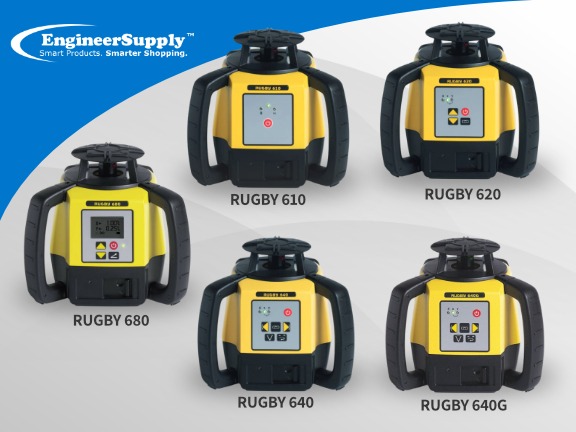
- Small Residential Projects → Rugby 610: Best for basic home construction work like small layouts and simple leveling tasks.
- Drainage and Grading Work → Rugby 620: Good for setting slopes and checking ground levels for proper water flow.
- General Construction Layout → Rugby 640: Used for everyday site layout tasks such as setting foundations, forms, and elevations.
- Large Infrastructure Projects → Rugby 680: Built for bigger jobs that need longer working range and continuous site use.
- Indoor or Low-Light Work → Rugby 640G: Features a green laser that is easier to see inside buildings or in dim areas.
Picking the right tool for the job helps you work more smoothly, avoid mistakes in layout, and finish tasks more efficiently.
Why Rotary Lasers Improve Elevation Work
Setting elevations by hand can lead to mistakes, especially on large construction sites. A rotary laser level gives a steady, continuous guide that helps keep work consistent, reduces rework, and makes site tasks faster.
Systems like the Leica Geosystems Rugby Series are widely used in the field because they perform well even in tough construction conditions.
For contractors, survey crews, and site engineers, it has become a trusted tool for modern elevation and grading work and it is available through Engineer Supply.
Need Help Choosing a Rotary Laser Level?
Choosing the right rotary laser level depends on your project size and job requirements. If you’re unsure which model fits your job site, expert guidance can help you avoid costly mistakes and delays.
For a Quote or Personalized Guidance:
Call or Text: 434-755-7717
Email: sales@engineersupply.com
Need Support for Your Rotary Laser Level?
Our service repair team can help with calibration, repairs, and maintenance to keep your rotary laser level performing reliably on the job site.
Customer Support: 800-591-8907
Repairs & Maintenance: Call or Text 434-200-8477
More Articles on Leica